Charles Jones was born in Beccles, Suffolk, in 1830 and died on 24 August 1913 at the age of 83. In 1863 he was first commissioned by the Municipal Borough of Ealing on a commission-only basis, and in 1882 he was given a salaried post as the borough's surveyor, engineer, and architect. He served Ealing for fifty years until shortly before his death, making him the single most influential figure in the borough's physical transformation during the Victorian and Edwardian periods.
Early Civic Infrastructure
Jones's first work for the council in 1863 was not a building at all, but Ealing's first proper sewage system. He also designed the sewage farm at Clayponds on Occupation Lane and South Ealing Road, and served on the first Local Board of Health. This early public health work helped Ealing resist water-borne disease at a time when rapid suburban growth was placing severe strain on rural infrastructure.
He later designed and oversaw Ealing's first electricity generating station, built in 1894 on Occupation Lane, which provided the borough with its first electric street lighting. Responsibility for well-metalled roads also fell under his office as the village grew into a town.
The Town Halls
Jones designed both of Ealing's Victorian town halls. The Old Town Hall on The Mall was completed in 1874 in the Gothic Revival style, built of rubble masonry with an asymmetrical frontage of six bays and a distinctive three-stage tower. Architectural historian Nikolaus Pevsner later praised it as "more daring than most suburban municipal buildings of this date." It is now Grade II listed and houses a National Westminster Bank branch.
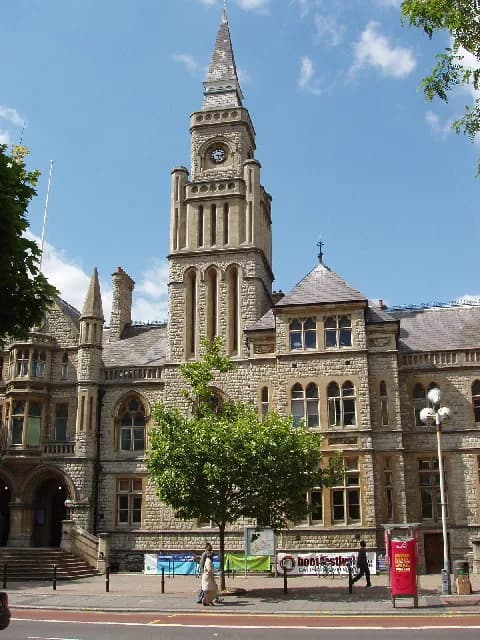
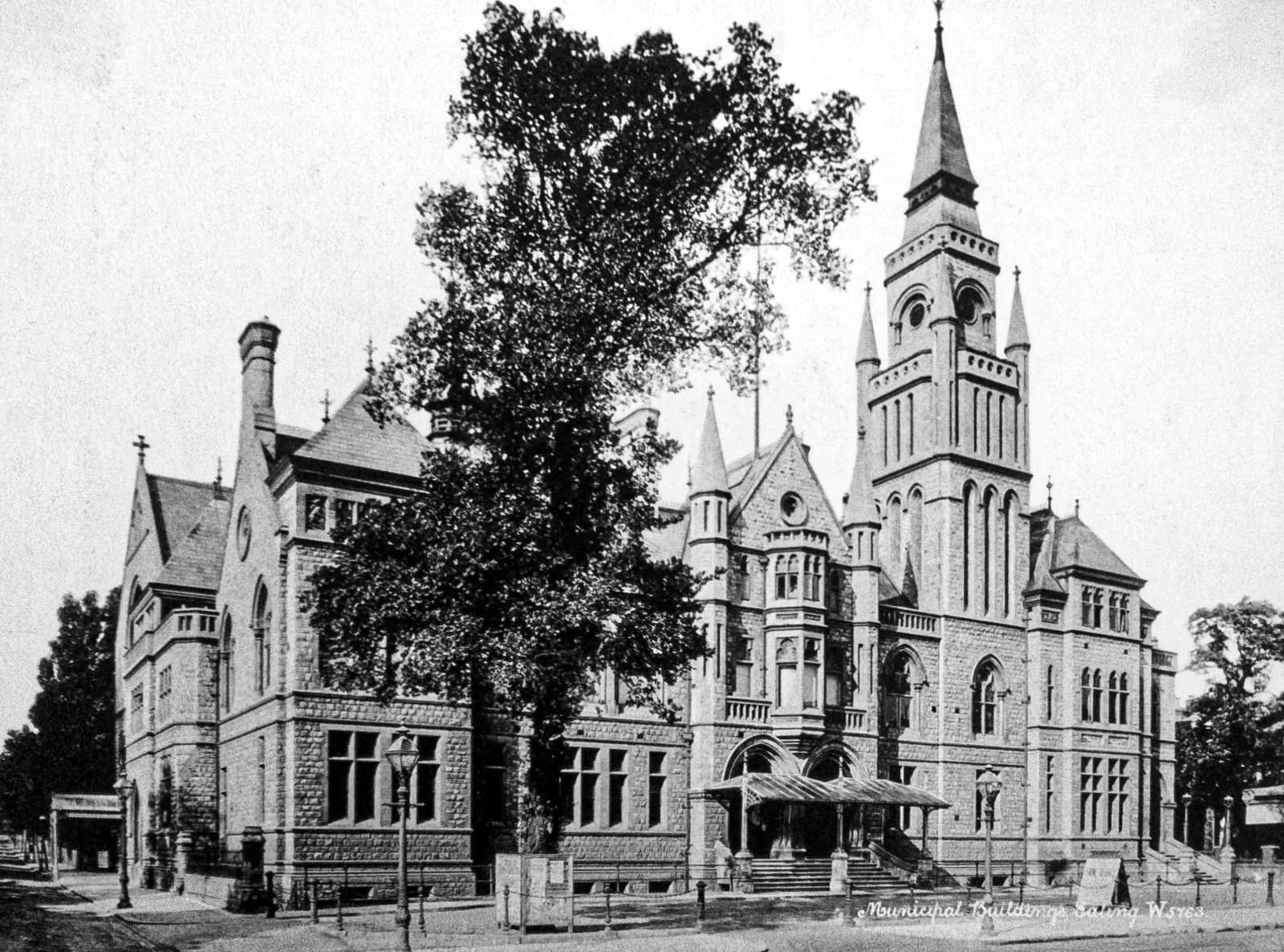
Within little more than a decade, the Old Town Hall had become too small for the expanding borough. Jones designed the present Ealing Town Hall on New Broadway, which was completed in 1888 at a cost of £16,000. Built in the Gothic Revival style with Kentish rag-stone walls and Bath stone mouldings, its asymmetrical eleven-bay frontage features a double round-arched doorway, oriel windows, a gable with turrets, and an off-centre clock tower with a spire. It was officially opened by Edward, Prince of Wales (later Edward VII), and Princess Alexandra on 15 December 1888. The building is Grade II listed and was extended eastward by George Fellowes Prynne in 1930.
Adjacent to the Town Hall, Victoria Hall was opened on the same day. Built by public subscription to celebrate Queen Victoria's 1887 Golden Jubilee, the 74-foot-long hall has a hammer-beam roof spanning 45 and a half feet, stained glass windows, and shields of the local parishes. It is also Grade II listed as part of the Town Hall complex.
Churches, Schools, and Cemeteries
Jones's architectural output across Ealing was extensive. In 1860 he designed the Congregational Church on Ealing Green in the Gothic style. In 1869 he completed the Methodist Church at the north end of Windsor Road, at the junction with Uxbridge Road; the building is now the Polish Roman Catholic Church of Our Lady Mother of the Church and is Grade II listed.
He also designed the two chapels at South Ealing Cemetery in 1861, linked by a porte cochère with a clock and belfry; the stained glass was added later by Edward Stanley Watkins in 1908. The cemetery chapels are Grade II listed.
His school designs included Drayton Green Primary School (1908), Little Ealing Primary School (1905), and North Ealing Primary School (1911). Little Ealing's main hall was built in a baronial style with hammer beams, while Drayton Green features yellow brick with red brick dressing and a square cupola bell house with red terracotta tiles. Lammas School (1910) and Northfields School (1905) have since been demolished.
Parks, Tree Planting, and Pitzhanger Manor
Jones was instrumental in shaping Ealing's green spaces. He oversaw the planting of the chestnut tree avenues on Ealing Common, which gave the open land much of its present-day character. He also converted former private estates into public pleasure parks after their purchase by the council.
In 1901 he negotiated the purchase of the Walpole estate, comprising Pitzhanger Manor and 28 acres of land, from Sir Spencer Walpole. The grounds were opened as Walpole Park on 1 May 1901, while Jones adapted the Grade I listed manor house itself into a free public lending library, which opened in April 1902 and remained in use until 1985. His sympathetic alterations allowed the building to be restored later to its early nineteenth-century appearance.
Housing and Professional Writing
Jones served on the board of the Ealing, Acton, and Hanwell Permanent Benefit Building Society and purchased land at Castle Bar, the former home of Prince Edward, Duke of Kent, for private house-building projects. He also published several works documenting Ealing's rapid growth, including 20 Years Development of a London Suburb (1884), Ealing: From Village to Corporate Town (1904), and Decade of Progress 1901–1911 (1911). By 1902 Ealing was being described as the "Queen of the Suburbs," a phrase Jones used in the preface to his 1902 book.
Legacy in Ealing Today
Jones died on 24 August 1913, having retired only shortly before. He is commemorated by a portrait bust in Walpole Park bearing the inscription "Charles Jones M.Inst. CE, FSI, 1830–1913, architect, engineer & surveyor," alongside the motto "Respice Prospice." His buildings survive across the borough, with Ealing Town Hall, the Old Town Hall, the Methodist Church, and South Ealing Cemetery Chapels all holding statutory listed status. The former fire engine station behind the Town Hall is locally listed by Ealing Council, and lamp posts inscribed 1905 can still be found in the borough.